Most home learning challenges are not caused by lack of effort, but by small mistakes that build over time.
Understanding a few common mistakes can help parents avoid unnecessary stress and build a healthier, more sustainable learning experience at home.
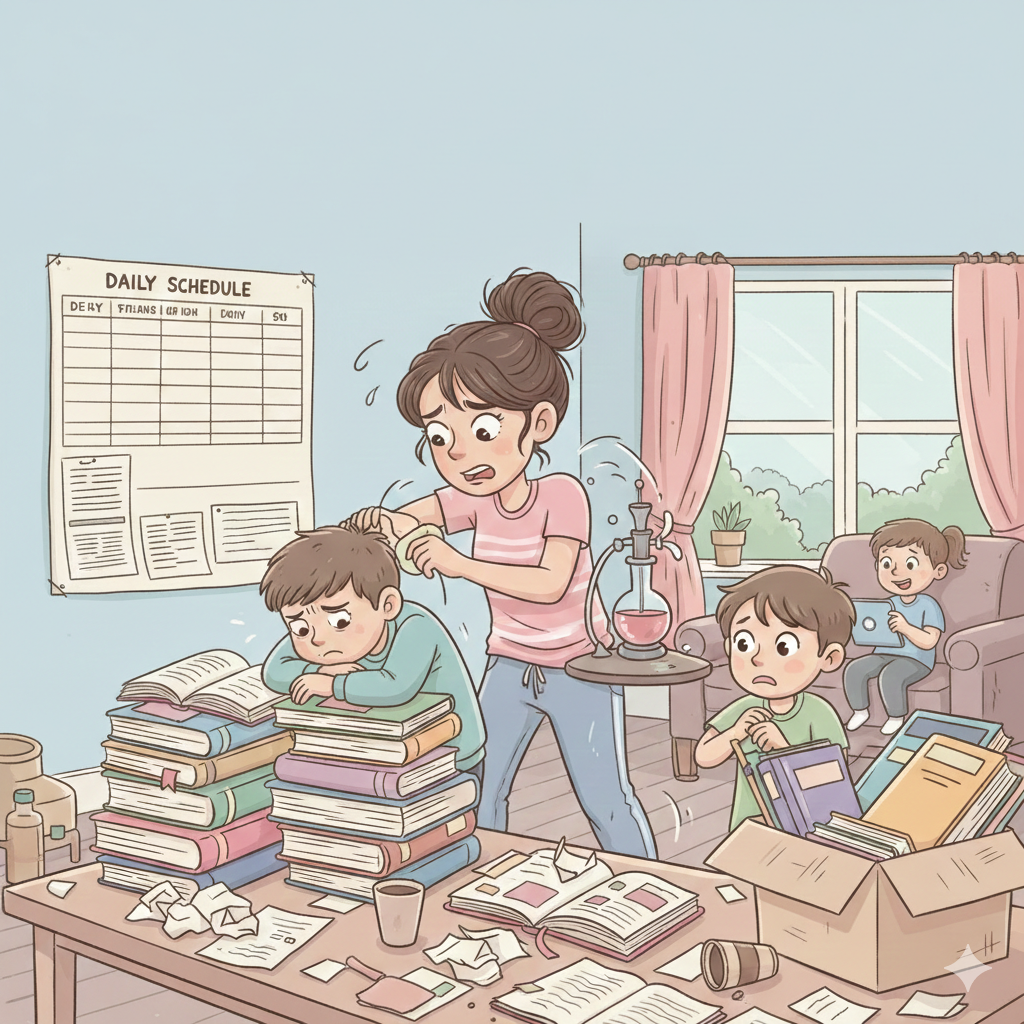
Mistake 1 – Doing Too Much, Too Soon
One of the most common mistakes parents make is trying to do too much in a short period of time. Parents try to create full schedules immediately. This often leads to packed schedules, frustration, and burnout; for both the parent and the child.
Young children have limited attention spans. Long lessons or too many activities can make learning feel like a chore. A better approach is to focus on one or two small learning moments each day and allow space for rest and play.
Mistake 2 – Using Too Many Resources
Home learning does not need to look like a classroom. When parents rely too heavily on worksheets, strict schedules, or formal lessons, children may lose interest quickly. This reduces their focus.
At home, learning can be flexible and creative. Use fewer and consistent resources. Reading together, talking about everyday experiences, playing educational games, or exploring nature are all effective ways children learn. The goal is understanding, not completing pages of work.
Mistake 3 – Lack of Consistency
Inconsistency is another common challenge. Many parents start with enthusiasm but stop when routines become difficult to maintain.
Children benefit more from a simple home learning routine than from occasional intense learning sessions. Even short, regular activities help children build habits and confidence over time. Consistency matters more than perfection.
Mistake 4 – Overhelping the Child
Children are naturally curious, but that curiosity can fade if learning activities don’t match their interests. Parents intervene too quickly. When parents choose materials or topics without considering what excites their child, motivation often drops. This in turn reduces independence.
Pay attention to what your child enjoys; stories, building, drawing, asking questions, and use those interests as learning opportunities. Interest-led learning keeps children engaged and makes learning feel enjoyable rather than forced.
Final Thoughts
Avoiding a few key mistakes is often more effective than trying to do everything correctly.
Small steps taken regularly can make a meaningful difference over time.