Homework problems are rarely caused by a single issue.
In many homes, homework gradually turns into a daily cycle of reminders, resistance, frustration, and unfinished tasks. Parents often assume the child is being lazy or careless, while children begin associating homework with pressure and stress.
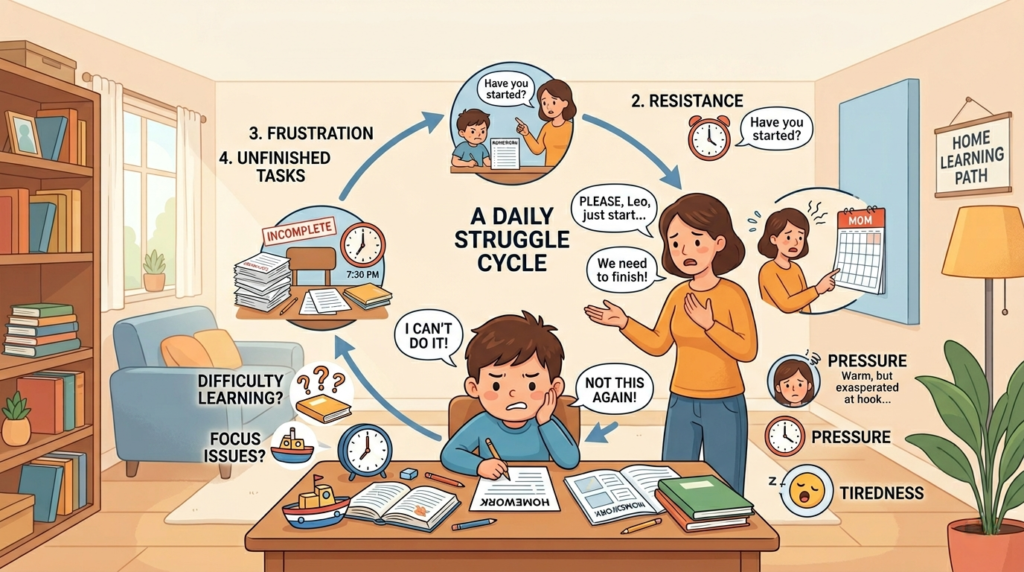
Over time, this repeated pattern can affect motivation, confidence, and family relationships.
Understanding why homework becomes difficult is the first step toward improving it.
Why Homework Struggles Develop
Homework difficulties usually build gradually rather than appearing suddenly.
Several factors commonly contribute to the problem.
1. Tasks Feel Overwhelming
Children are more likely to avoid homework when tasks appear too large or unclear.
This is especially common when:
- instructions are confusing
- multiple tasks are assigned together
- the child does not know how to begin
When the starting point feels uncertain, avoidance increases.
2. Focus Breaks Down Easily
Some children struggle to maintain attention long enough to complete homework efficiently.
Distractions, mental fatigue, and long study sessions can all reduce concentration.
A deeper explanation of why this happens is covered in Why Children Lose Focus While Studying (and What Actually Helps).
3. Homework Depends Too Much on Supervision
In some cases, children become dependent on constant reminders or monitoring.
Homework only begins when:
- a parent sits nearby
- repeated prompts are given
- pressure increases
Over time, this weakens independent learning behavior.
4. Study Routines Are Inconsistent
When homework happens at different times each day, children must repeatedly adjust and decide when to begin.
This increases resistance and delays starting.
A clearer structure for managing study time is explained in How to Structure a Study Session That Your Child Can Follow Consistently.
Why Pressure Often Makes Homework Worse
When homework struggles continue, many parents respond by increasing pressure.
This may include:
- longer study time
- stricter supervision
- repeated reminders
- frustration during mistakes
Although understandable, pressure often increases emotional resistance rather than improving learning.
Children may complete the work eventually, but with reduced focus, confidence, and motivation.
What Actually Helps
Homework becomes more manageable when the goal shifts from control to structure.
1. Make the First Step Small
Children are more likely to begin when the task feels manageable.
Instead of:
“Finish all your homework”
start with:
- “Complete the first question”
- “Read the instructions first”
Small beginnings reduce hesitation.
2. Use Predictable Homework Timing
Homework becomes easier when it follows a consistent daily pattern.
Even a short, reliable routine improves readiness and reduces negotiation.
3. Reduce Excessive Supervision
Parents should remain available, but not constantly involved.
Gradually stepping back helps children build responsibility and confidence.
A structured explanation of this transition is covered in How to Build Learning Independence in Children.
4. Focus on Consistency Rather Than Perfection
Not every homework session will go smoothly.
The goal is not perfect performance every day. The goal is building stable learning behavior over time.
Small improvements repeated consistently are more effective than occasional intense effort.
Common Mistakes to Avoid
1. Turning Homework Into Constant Conflict
Frequent arguments increase emotional resistance toward learning.
2. Expecting Immediate Independence
Children often need gradual support before they can manage homework consistently on their own.
3. Measuring Success Only by Completion
A child who completes homework under heavy pressure is not necessarily developing effective learning habits.
Conclusion
Homework struggles usually reflect problems with structure, focus, task initiation, or emotional pressure rather than unwillingness to learn.
When homework becomes predictable, manageable, and less emotionally charged, children are more likely to participate consistently.
Over time, small adjustments in routine, support, and expectations can significantly reduce daily conflict and strengthen independent learning behavior.
Homework improves not when pressure increases, but when learning conditions improve.