Successful learners do more than complete tasks.
They gradually learn to notice when something is not working, recognise their own mistakes, and decide whether they need to try a different approach. This ability is known as self-monitoring.
Children are not born with this skill. Like reading, writing, or problem-solving, self-monitoring develops through regular practice and thoughtful guidance. As children learn to reflect on their own work, they become more independent and confident learners.
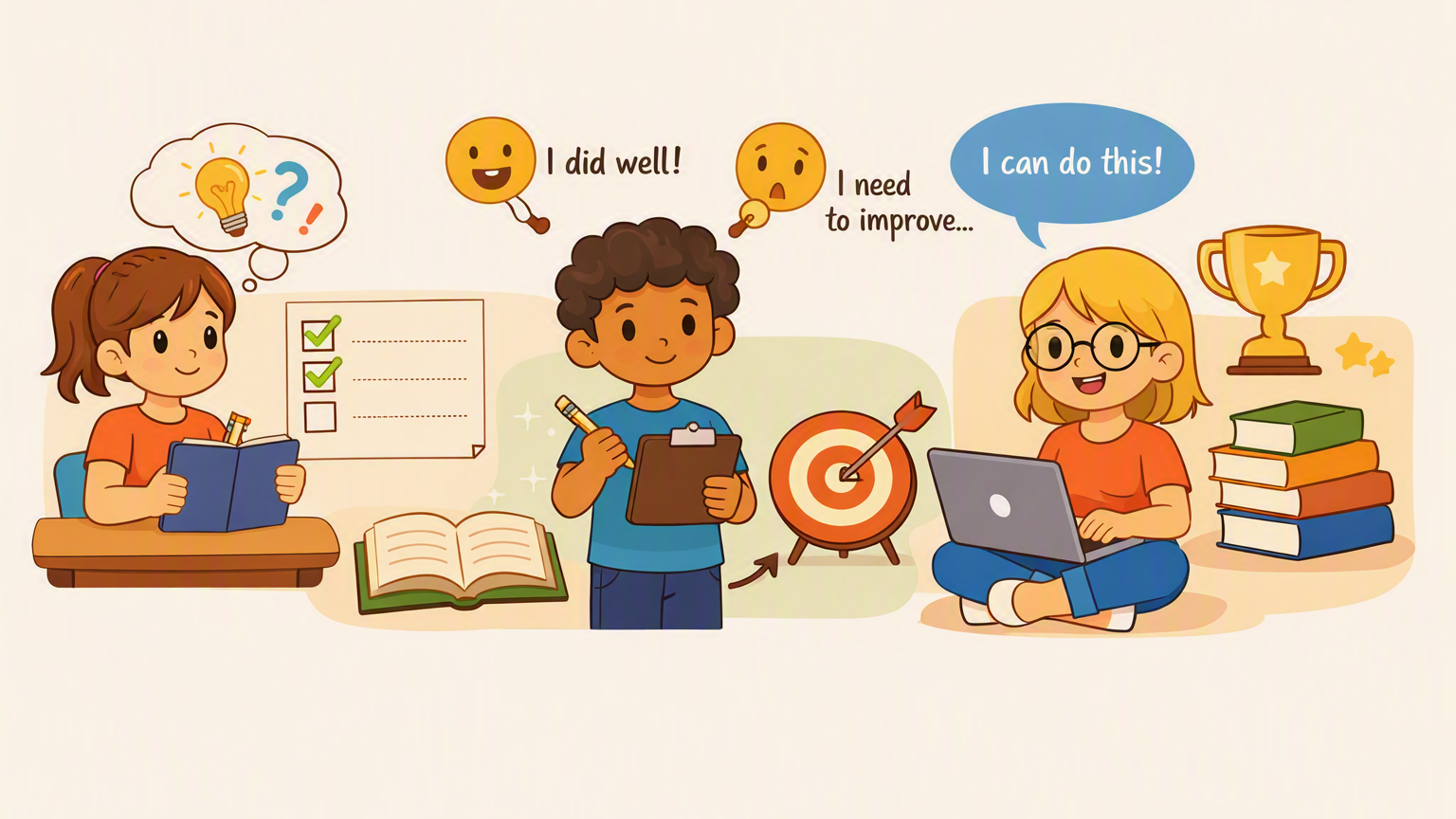
What Is Self-Monitoring?
Self-monitoring is the ability to observe and evaluate your own learning.
Instead of relying entirely on parents or teachers, children begin asking themselves questions such as:
- Did I understand this?
- Does my answer make sense?
- Have I completed every step?
- Should I check my work again?
These simple habits encourage children to take greater responsibility for their own learning.
Why Self-Monitoring Matters
Children who develop self-monitoring skills are more likely to:
- notice mistakes before someone else points them out
- recognise when they need help
- improve their accuracy over time
- become more confident working independently
- take greater ownership of their learning
Rather than depending on constant correction, they gradually learn to evaluate their own progress.
Self-monitoring also strengthens problem-solving skills, because children learn to recognise when one approach is not working and consider another.
Everyday Opportunities to Practise Self-Monitoring
Parents can encourage self-monitoring during everyday learning by asking children to pause and think about their work.
Simple opportunities include:
- checking homework before saying it is finished
- rereading written work
- reviewing maths calculations
- explaining how they solved a problem
- reflecting after completing a project
These small habits gradually become part of a child’s normal learning routine.
Five Ways Parents Can Encourage Self-Monitoring
1. Ask Reflection Questions
Instead of immediately checking the work yourself, ask:
- Are you happy with your answer?
- Is there anything you would change?
- Have you checked everything?
These questions encourage children to evaluate their own work first.
Reflecting before seeking help also supports better decision-making while learning, because children learn to think through their choices independently.
2. Allow Time for Review
Children often finish a task and immediately move on.
Encouraging them to spend one or two minutes reviewing their work helps develop careful thinking.
3. Normalise Finding Mistakes
Discovering a mistake should be viewed as progress, not failure.
When children understand that checking their work is a normal part of learning, they become less afraid of making errors.
4. Praise Careful Thinking
Instead of praising only correct answers, recognise behaviours such as:
- checking work carefully
- noticing an error independently
- improving an answer after reflection
This reinforces the learning process rather than the outcome.
5. Gradually Reduce Adult Checking
As children become more confident, encourage them to review their own work before asking an adult to check it.
Over time, this builds greater independence.
This gradual responsibility also helps children build learning independence as they become less dependent on constant guidance.
Common Mistakes Parents Make
Avoid:
- correcting every mistake immediately
- checking work before the child has reviewed it
- focusing only on correct answers
- expecting perfect self-evaluation from the beginning
Self-monitoring develops gradually through repeated opportunities to reflect.
Signs Self-Monitoring Skills Are Improving
You may notice that your child:
- checks work without being reminded
- notices simple mistakes independently
- explains their thinking more clearly
- asks for help more appropriately
- becomes more confident completing tasks alone
These behaviours often develop slowly but become increasingly consistent with practice.
Conclusion
Self-monitoring is one of the habits that helps children become independent learners.
Rather than relying on adults to identify every mistake, children gradually learn to evaluate their own work, reflect on their progress, and make improvements independently.
By encouraging regular reflection instead of immediate correction, parents help children build confidence, responsibility, and lifelong learning skills.