Being organised can make learning easier for children.
A child may understand what to do but still struggle because books are difficult to find, materials are misplaced, or several tasks become mixed together. These everyday difficulties can make learning feel more complicated than it needs to be.
Organisation is not about keeping everything perfect. It is about helping children develop simple systems that make it easier to find what they need, understand what needs to be done, and take responsibility for their learning.
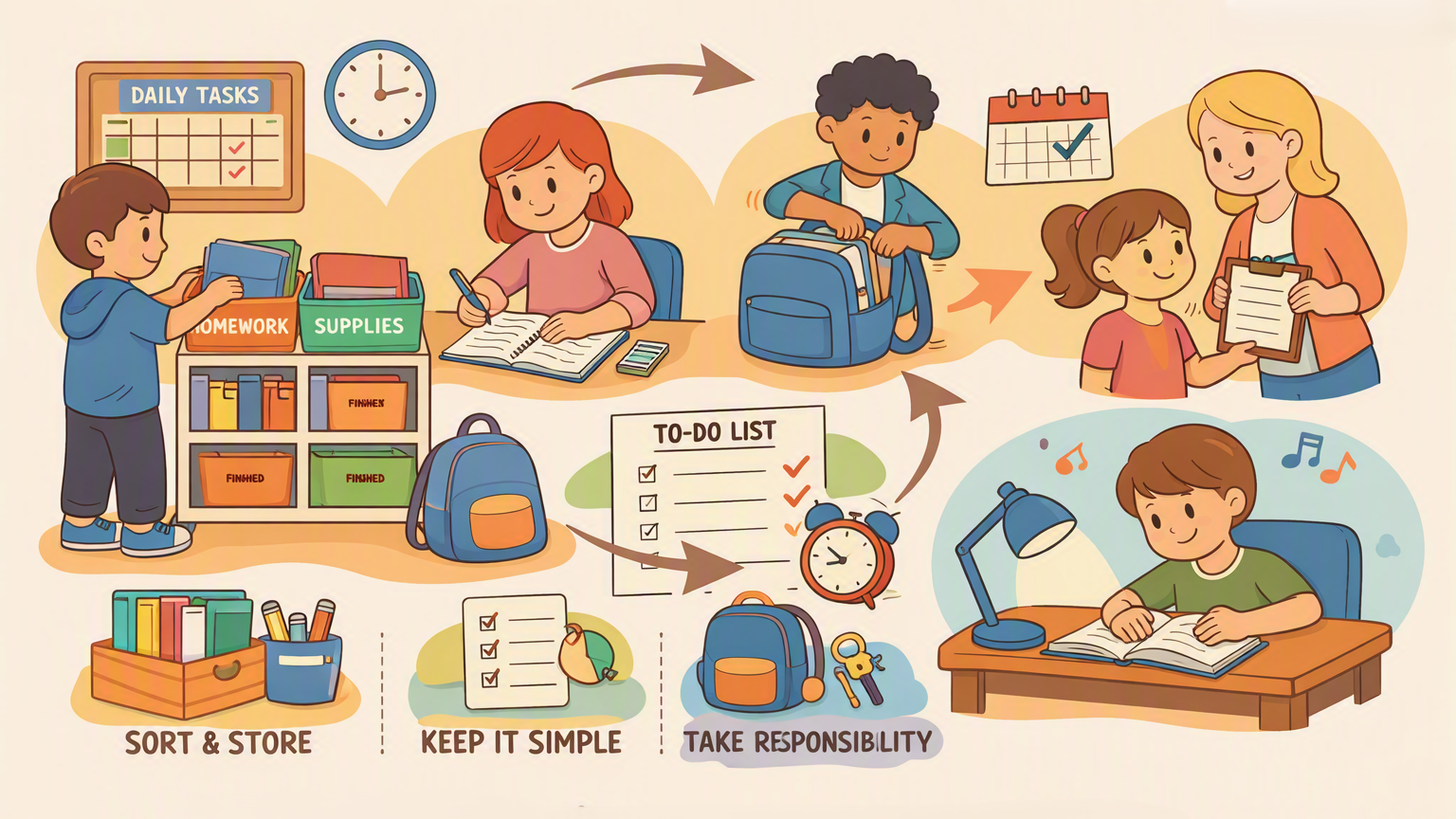
These skills develop gradually through repeated practice and appropriate support.
Why Organisation Skills Matter
Organisation helps children manage the practical side of learning.
It can help them:
- find learning materials more easily
- keep track of tasks
- prepare before beginning work
- reduce unnecessary distractions
- take greater responsibility for their belongings and schoolwork
Good organisation does not guarantee academic success, but it can remove practical barriers that make learning more difficult.
What Organisation Looks Like in Everyday Learning
Organisation can be simple.
For a younger child, it might mean putting books back in the same place after reading.
For an older child, it might involve keeping school materials together, checking what assignments need to be completed, or preparing materials before starting work.
The exact system will depend on the child’s age and level of independence.
The goal is not to create a complicated organisational system. It is to create habits that the child can realistically maintain.
Organisation can also support the planning and time management skills children need as their academic responsibilities increase.
Five Ways Parents Can Help Children Become More Organised
1. Give Important Items a Consistent Place
Choose simple, predictable places for frequently used learning materials.
Books, pencils, notebooks, and other supplies should be easy to find.
When children know where things belong, they spend less time searching and more time learning.
2. Keep the Learning Space Simple
A crowded workspace can make it harder for children to focus on the task in front of them.
Keep only the materials needed for the current activity within easy reach.
Other items can be stored nearby but outside the immediate workspace.
The goal is not a perfectly tidy room. It is a space that supports the child’s current task.
3. Teach Children to Prepare Before Starting
Before beginning a learning activity, encourage children to check what they need.
A simple routine might be:
- Identify the task.
- Gather the necessary materials.
- Clear the workspace.
- Begin the activity.
Over time, children can learn to complete these steps without being reminded.
4. Use Simple Systems Children Can Remember
Organisation systems should match the child’s abilities.
A younger child may need labelled containers or a small number of clearly defined places for materials.
An older child may be ready to manage folders, notebooks, or a simple task list.
If the system is too complicated, children may stop using it.
5. Gradually Transfer Responsibility
Parents often organise things because it is quicker.
However, doing everything for a child can limit opportunities to develop independence.
Instead, provide support when needed and gradually allow the child to take responsibility for organising their own materials and learning.
This process may take time, but the aim is for the child to eventually manage simple organisational tasks independently.
Giving children appropriate responsibility also helps build learning independence over time.
This gradual transfer of responsibility works especially well when children learn to monitor their own learning rather than depending on adults to check everything.
When Organisation Becomes Overwhelming
Some children may struggle when too many organisational demands are introduced at once.
If a child frequently loses materials, forgets instructions, or becomes frustrated by a complicated system, simplify it.
Start with one habit.
For example:
Put learning materials back in the same place after use.
Once that becomes consistent, introduce another small responsibility.
Small systems are often easier to maintain than major changes introduced all at once.
Common Mistakes Parents Make
Expecting Perfect Organisation
Children are still developing these skills.
Occasional forgotten materials or untidy spaces are normal.
Creating Systems That Are Too Complicated
A system only works if the child can understand and maintain it.
Keep it simple.
Organising Everything for the Child
Helping is appropriate, but taking over every organisational task removes opportunities for practice.
Focusing Only on Tidiness
A neat desk does not necessarily mean a child is organised.
Organisation is ultimately about whether the child can manage materials and learning responsibilities effectively.
Signs Organisation Skills Are Improving
You may notice that your child:
- knows where learning materials belong
- prepares more independently
- loses things less frequently
- needs fewer reminders
- keeps track of simple responsibilities
- begins putting materials away without being asked
These changes may be small at first.
What matters is that responsibility gradually shifts from the parent to the child.
Conclusion
Organisation is a practical learning skill that develops through repeated habits.
Children do not need complicated schedules or perfectly tidy workspaces. They need simple systems that make their learning responsibilities easier to manage.
By giving materials consistent places, keeping systems simple, and gradually transferring responsibility, parents can help children become more organised without creating unnecessary pressure.
Over time, these habits support greater independence and make everyday learning easier to manage.