Learning to concentrate is not simply about removing every distraction.
Children also need to gradually develop the ability to notice distractions, return their attention to the task, and continue working when something else competes for their attention.
This skill develops over time.
A younger child may need an adult to help create a quiet environment, while an older child can gradually learn to recognise distractions and make choices that protect their attention.
The goal is not to expect children to ignore every distraction. It is to help them become increasingly capable of managing their attention during learning.
What Counts as a Distraction?
A distraction is anything that pulls attention away from the task a child is trying to complete.
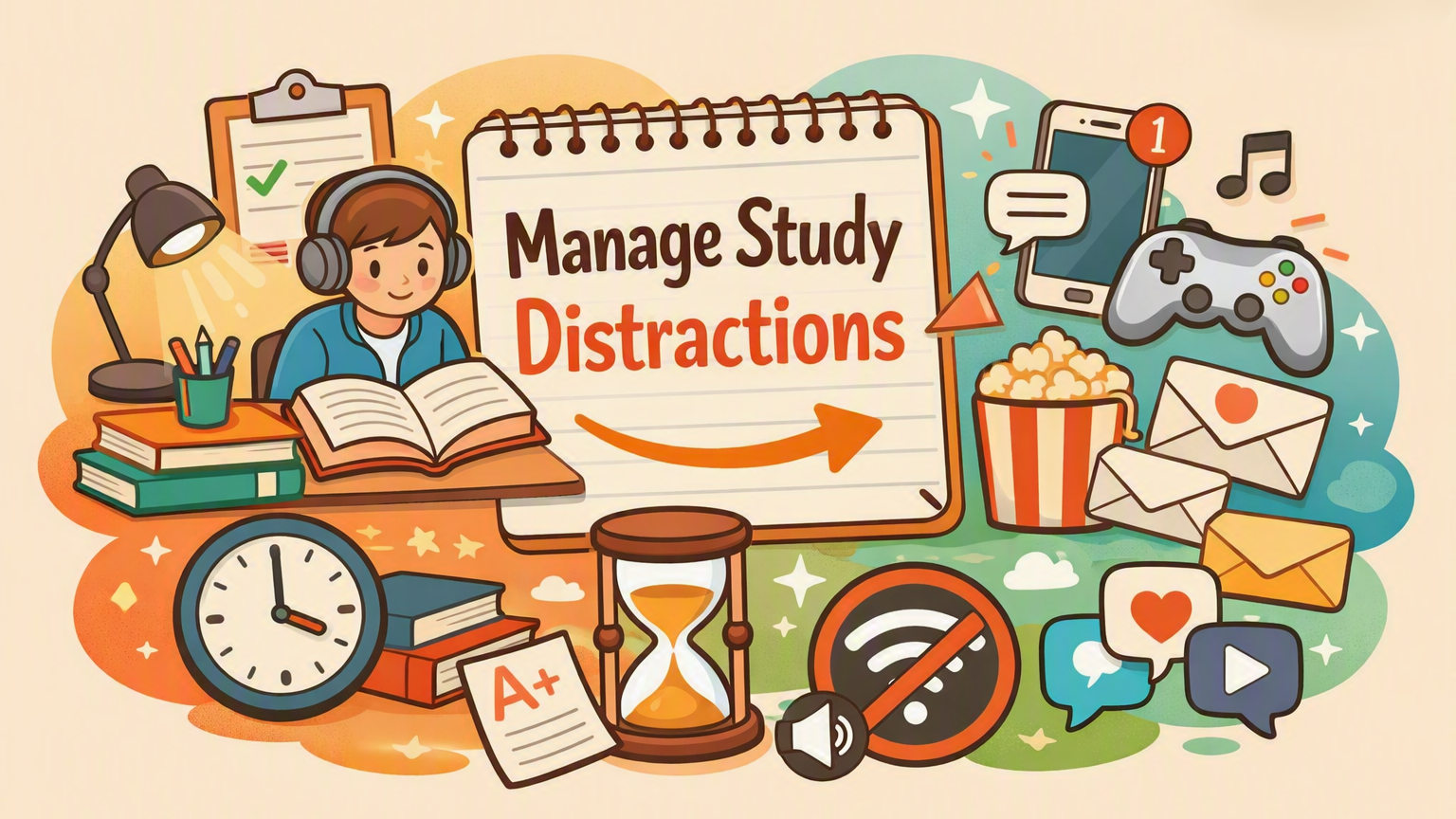
Some distractions come from the environment, such as:
- television or background conversations
- mobile phones and notifications
- toys within reach
- unnecessary noise
- people moving around the room
Other distractions come from within the child, such as:
- thinking about something unrelated
- feeling bored
- becoming frustrated
- worrying about making a mistake
- wanting to switch to a more enjoyable activity
Understanding the source of a distraction can make it easier to decide what support is needed.
Why Children Struggle With Distractions
Children are still developing the ability to control and redirect their attention.
A child may genuinely intend to complete a task but lose focus when something more interesting appears.
This does not necessarily mean the child is lazy or unwilling to learn.
The difficulty may simply reflect a developing ability to manage attention and resist competing impulses.
The challenge can also increase when a task is too difficult, too long, or poorly matched to the child’s current abilities.
Understanding why children lose focus while studying can help parents distinguish ordinary distraction from a learning difficulty that needs a different approach.
Five Ways Parents Can Help Children Manage Distractions
1. Identify the Most Common Distractions
Start by observing what usually interrupts learning.
Is it a phone notification?
A television?
A younger sibling?
A nearby toy?
Or does the child frequently leave the task because it feels difficult?
Identifying the cause is more useful than simply telling a child to “focus.”
2. Remove Unnecessary Distractions
Some distractions do not need to be managed through self-control.
If a phone is not needed for learning, place it somewhere else.
If the television is running in the background, turn it off.
Reducing unnecessary distractions makes it easier for children to practise managing the ones that cannot always be avoided.
3. Teach Children to Notice When Attention Drifts
Children can gradually learn to recognise when their attention has moved away from the task.
A simple reminder might be:
“I noticed my attention moved somewhere else. I will bring it back to my work.”
The purpose is not to criticise the child.
It is to help them recognise what is happening.
4. Encourage Short Periods of Focus
Children do not always need to work for long periods.
A short period of focused learning followed by a brief break can be more manageable than expecting a child to maintain attention for an extended session.
As children become more capable, the length of focused work can gradually increase.
Learning to notice when attention drifts also requires self-monitoring skills, because children need to recognise what is happening before they can adjust their behaviour.
5. Help Children Return to the Task
Losing focus is normal.
The important skill is learning how to return.
Instead of reacting negatively when attention drifts, encourage the child to identify the next small step and continue from there.
This teaches recovery rather than perfection.
When Distraction Is a Sign That Something Else Is Wrong
Frequent distraction is not always caused by the environment.
Sometimes it is a sign that:
- the task is too difficult
- the task is too easy
- the child does not understand the instructions
- the learning session is too long
- the child is tired
- the child is frustrated
In these situations, simply removing distractions may not solve the underlying problem.
Parents should first consider whether the learning task itself needs adjustment.
Common Mistakes Parents Make
Expecting Constant Focus
Children will naturally lose attention from time to time.
The goal is not uninterrupted concentration.
It is gradually improving the ability to return attention to the task.
Removing Every Possible Distraction
A completely controlled environment is not always realistic.
Children eventually need to learn how to manage ordinary distractions that cannot always be removed.
Treating Distraction as Bad Behaviour
A child who looks away or loses focus briefly may not be deliberately avoiding learning.
Responding calmly makes it easier to teach the skill rather than turning every distraction into a conflict.
Using Constant Reminders
Repeatedly saying “focus” may not teach a child what to do.
More useful guidance explains how to notice distraction and return to the next step.
Signs Your Child Is Becoming Better at Managing Distractions
You may notice that your child:
- recognises when attention has drifted
- returns to a task with fewer reminders
- ignores some distractions without adult intervention
- chooses a quieter environment when appropriate
- completes short periods of focused work more consistently
- becomes less frustrated when attention is interrupted
These changes usually develop gradually.
Conclusion
Managing distractions is a skill that children develop over time.
Parents can support this development by reducing unnecessary distractions, helping children recognise when their attention has drifted, and teaching them how to return to the task without frustration.
The goal is not perfect concentration.
It is gradual progress toward greater control over attention.
As children become more capable of managing distractions, they can take greater responsibility for their own learning and work more independently.
This gradual responsibility contributes to learning independence, as children become less dependent on adults to manage every part of their study environment.