Frustration is a normal part of learning.
Children experience frustration when:
- tasks feel difficult
- mistakes happen repeatedly
- progress feels slow
- expectations feel too high
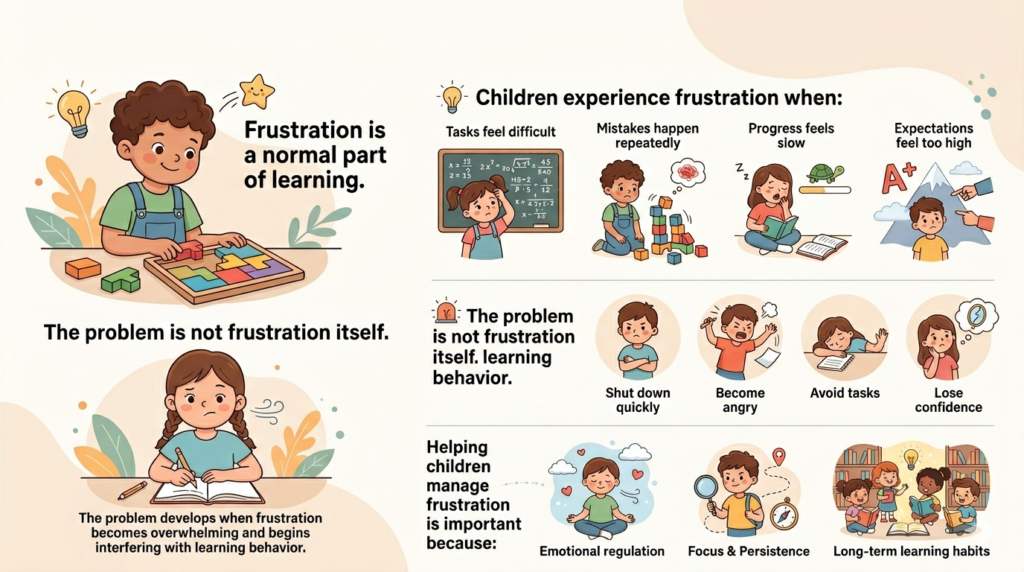
The problem is not frustration itself. The problem develops when frustration becomes overwhelming and begins interfering with learning behavior.
Some children shut down quickly, while others become angry, avoid tasks, or lose confidence.
Helping children manage frustration is important because emotional regulation strongly affects focus, persistence, and long-term learning habits.
Why Learning Frustration Happens
Learning requires effort, uncertainty, and repeated correction.
Children are regularly asked to:
- attempt unfamiliar tasks
- tolerate mistakes
- continue despite difficulty
This naturally creates emotional discomfort.
Children who have not yet developed frustration tolerance often struggle to remain engaged once learning becomes difficult.
Signs That Frustration Is Affecting Learning
Frustration may appear as:
- giving up quickly
- emotional outbursts
- refusal to continue
- excessive self-criticism
- avoidance of challenging tasks
- dependence on immediate help
In many cases, these reactions are attempts to escape emotional discomfort rather than unwillingness to learn.
Why Pressure Usually Makes Frustration Worse
When frustration appears, adults sometimes respond by increasing pressure or correction.
This may include:
- repeated reminders
- criticism
- longer study sessions
- emotional reactions during mistakes
Although intended to improve performance, these responses often increase stress and reduce persistence.
A deeper explanation of this pattern is covered in Why Forcing Study Time Often Backfires.
What Actually Helps
1. Reduce the Size of the Challenge
Large or complex tasks increase emotional overload.
Breaking work into smaller sections helps children focus on manageable progress instead of the entire difficulty.
Smaller goals reduce emotional resistance.
2. Allow Time for Thinking
Children often become more frustrated when they feel rushed.
Pausing briefly before stepping in allows children to:
- process information
- attempt solutions independently
- remain mentally engaged
Immediate intervention can unintentionally increase dependence.
A structured explanation of balancing support and independence is covered in How to Build Learning Independence in Children.
3. Normalize Mistakes
Children manage frustration more effectively when mistakes are treated as part of learning rather than failure.
This helps reduce fear and emotional pressure during difficult tasks.
4. Stay Calm During Difficult Moments
Children often respond to the emotional environment around learning.
Calm responses from parents help children regulate emotions more effectively.
Repeated emotional conflict around learning increases stress and avoidance.
5. Focus on Progress Rather Than Perfection
Improvement usually develops gradually.
Children benefit more from recognizing steady effort and persistence than from focusing only on perfect results.
Consistent progress builds confidence over time.
The Connection Between Frustration and Avoidance
Children who struggle to manage frustration often begin avoiding difficult tasks entirely.
This avoidance may appear as:
- procrastination
- distraction
- incomplete work
- refusal to begin
A deeper explanation of this pattern is covered in Why Some Children Avoid Difficult Tasks.
The Role of Structure and Routine
Frustration becomes harder to manage when:
- routines are inconsistent
- expectations change constantly
- study sessions are too long
- distractions are frequent
Predictable learning conditions reduce emotional overload and improve stability.
A practical system for creating manageable study sessions is explained in How to Structure a Study Session That Your Child Can Follow Consistently.
Common Mistakes to Avoid
1. Expecting Immediate Emotional Control
Children develop frustration tolerance gradually through repeated experience.
2. Solving Problems Too Quickly
Immediate rescue can reduce persistence and problem-solving confidence.
3. Turning Mistakes Into Emotional Events
Excessive emotional reactions increase fear around learning.
Conclusion
Frustration is not a sign that learning is failing.
In many cases, it is a normal response to challenge, uncertainty, and effort.
Children gradually learn to manage frustration when learning conditions remain calm, structured, and manageable.
Over time, repeated experience with difficulty helps children build persistence, emotional regulation, and confidence.
The goal is not removing all frustration.
The goal is helping children continue learning without becoming overwhelmed by it.
Recommended Next Step
If your child gives up quickly during difficult work, the next step is to understand why some children avoid challenging tasks and how to build persistence gradually.