Screens are now part of everyday life for most children.
While devices can support learning, they also create frequent interruptions during study time. Notifications, videos, games, messaging, and constant switching between activities make it harder for children to maintain attention on a single task.
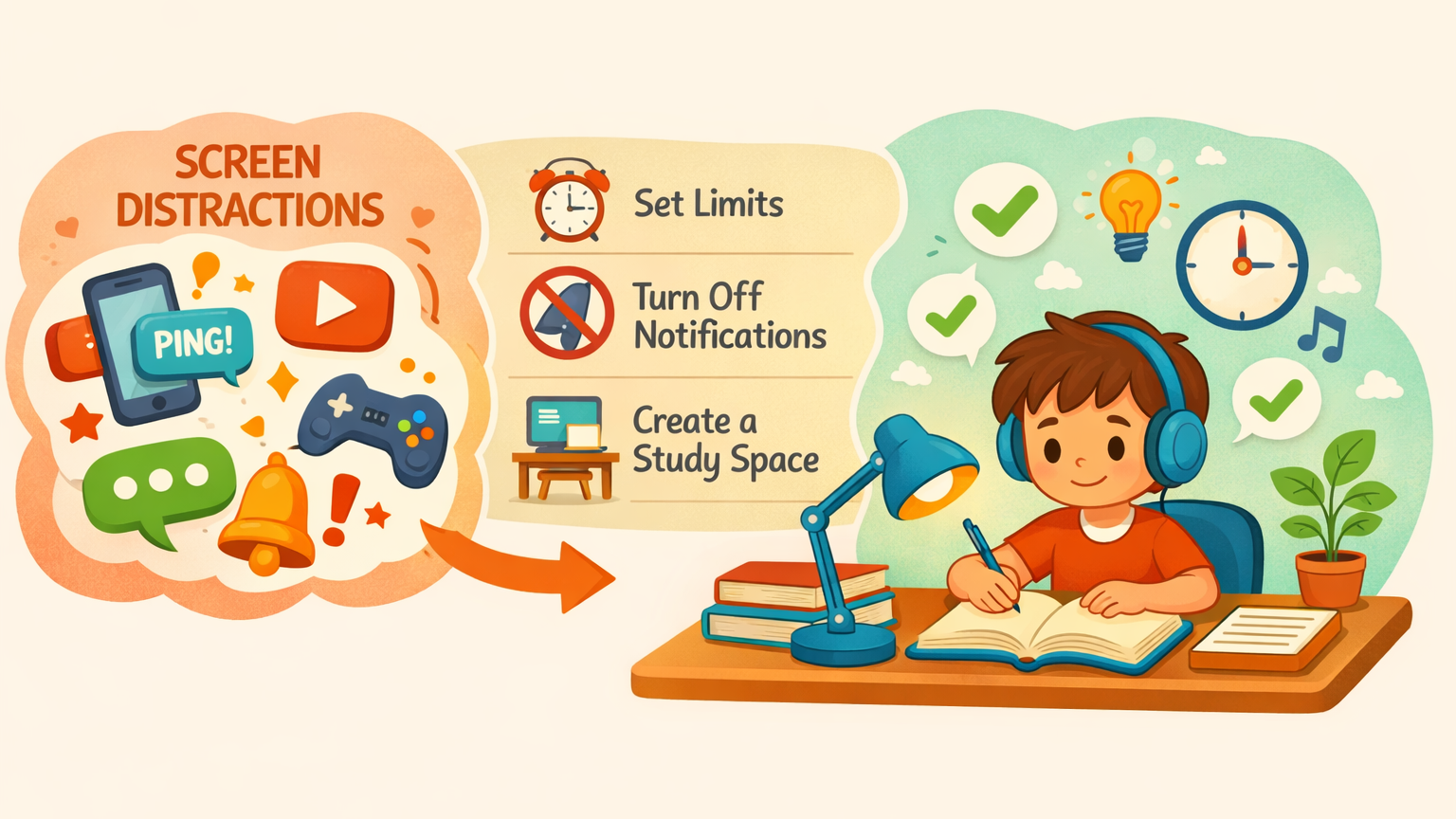
In many cases, the issue is not the screen itself, but the way it affects focus and learning behavior.
Reducing screen distractions is not about removing technology completely. It is about creating conditions where attention can remain stable during learning.
Why Screens Disrupt Focus So Easily
Screens compete for attention continuously.
Unlike books or paper-based activities, digital devices are designed to encourage rapid shifts in focus.
Children may:
- switch between tabs frequently
- check notifications automatically
- move quickly from study to entertainment
- lose track of the original task
These interruptions weaken concentration and make study sessions less effective.
A deeper explanation of how focus breaks down during study is covered in Why Children Lose Focus While Studying (and What Actually Helps).
Why Constant Switching Reduces Learning Quality
Frequent switching between tasks creates mental interruption.
Even short distractions can reduce:
- concentration
- memory retention
- task completion speed
Children may appear busy, but attention becomes fragmented.
Over time, this makes studying feel more tiring and less productive.
Common Situations That Increase Screen Distraction
Screen-related distractions often increase when:
- devices remain fully accessible during study
- study sessions are too long
- tasks feel difficult or unclear
- children rely on entertainment between every task
In many cases, screens become an easy escape from frustration or mental effort.
What Actually Helps Reduce Screen Distractions
The goal is not perfect control. The goal is improving the learning environment.
1. Keep Only Necessary Devices Available
If a device is not needed for learning, remove it from the study area during study time.
Reducing visual access lowers the urge to check screens repeatedly.
2. Turn Off Non-Essential Notifications
Notifications interrupt concentration immediately.
Silencing:
- messages
- app alerts
- social media notifications
helps children maintain attention for longer periods.
3. Use Shorter Study Sessions
Long study periods increase the urge to seek distraction.
Shorter sessions with clear stopping points are easier to sustain and reduce screen-checking behavior.
A practical way to structure these sessions is explained in How to Structure a Study Session That Your Child Can Follow Consistently.
4. Make the First Task Clear
Children are less likely to drift toward distractions when they know exactly how to begin.
Clear starting points reduce hesitation and improve engagement.
A step-by-step approach to improving this behavior is covered in How to Help Your Child Start Tasks Without Procrastination.
5. Separate Study Time From Entertainment Time
Using the same device for both entertainment and learning can weaken boundaries.
Whenever possible:
- complete study first
- use entertainment afterward
- avoid switching repeatedly between both
This helps children associate study time with focused attention rather than constant interruption.
The Role of Routine
Screen distractions become harder to manage when study routines are inconsistent.
Predictable study timing reduces negotiation and helps children prepare mentally for focused work.
Over time, routines reduce dependence on external reminders and improve self-management.
Common Mistakes to Avoid
1. Relying Only on Restriction
Excessive control without structure often increases resistance.
2. Expecting Long Periods of Digital Focus
Children usually focus better in shorter, manageable sessions.
3. Using Screens During Every Break
Frequent entertainment breaks can make it harder to return to focused work.
Conclusion
Screen distractions are now a normal challenge during study time, but they can be managed effectively.
Reducing unnecessary interruptions, creating clearer study structures, and using shorter focused sessions all help improve attention.
Over time, children develop stronger focus not through constant control, but through consistent routines and manageable learning conditions.
Technology becomes less disruptive when learning has clear structure and boundaries.