Many parents notice that their child delays starting tasks, even when they understand what needs to be done.
This often appears as procrastination, but in many cases, the issue is not laziness. It is difficulty with starting.
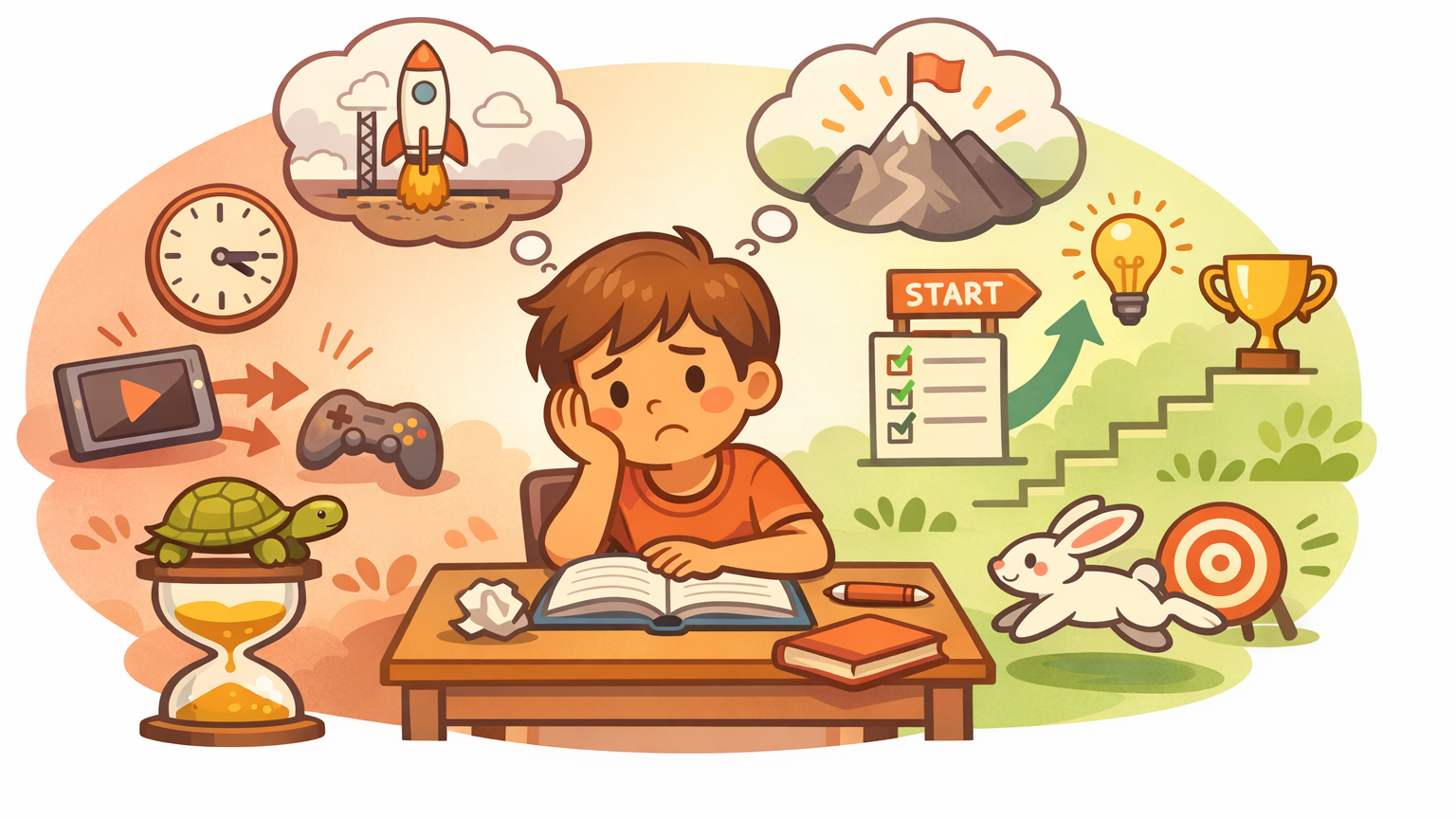
Getting started is one of the most important parts of learning. When children struggle to begin, tasks feel harder than they actually are, and delays become a pattern.
Why Children Delay Starting Tasks
Children do not usually delay tasks without a reason. Common causes include:
- tasks feel too large or unclear
- fear of making mistakes
- lack of routine or structure
- reliance on reminders or prompts
When starting feels difficult, avoidance becomes the default response.
Why Starting Matters More Than It Seems
Starting a task creates momentum.
Once a child begins, it becomes easier to continue. Without that first step, even simple tasks can feel overwhelming.
Developing the ability to begin without repeated prompting is a key part of learning independence. This ability is often referred to as task initiation, and it plays a central role in building effective study habits.
Common Mistakes Parents Make
1. Giving Too Many Reminders
Frequent reminders can reduce the child’s responsibility to start independently.
2. Breaking the Task Too Late
If a task is only simplified after the child resists, it reinforces avoidance rather than preventing it.
3. Stepping In Too Quickly
Starting the task for the child may solve the immediate problem, but it prevents them from developing the ability to begin on their own.
Practical Ways to Improve Task Initiation
1. Make the First Step Clear
Children are more likely to start when the first step is simple and specific.
Instead of saying:
“Start your homework”
say:
“Write the first answer”
“Read the first question”
Clear starting points reduce hesitation.
2. Use Short Start Times
Encourage the child to begin with a small commitment:
- “Work for 5 minutes”
- “Complete one question”
Once they start, continuing becomes easier.
3. Build a Predictable Routine
When tasks happen at a consistent time each day, starting becomes more automatic.
Routines reduce the need for decision-making and reminders.
4. Step Back After Starting
Provide support at the beginning if needed, but reduce involvement once the child has started.
This helps shift responsibility gradually.
Linking Starting to Independence
Task initiation does not develop in isolation.
Children are more likely to start tasks independently when parents adjust their level of support over time. This balance between support and independence is explained in How to Build Learning Independence in Children.
Strengthening Task Initiation Over Time
Improving task initiation is not about immediate change. It develops through repeated practice.
When children regularly:
- start tasks with minimal prompting
- complete small steps independently
- follow predictable routines
they begin to rely less on external reminders.
This leads to stronger study habits and more consistent learning behavior. A deeper explanation of task initiation and how it develops is covered in What Is Task Initiation and Why It Matters for Children.
Conclusion
Difficulty starting tasks is common, but it can be improved with the right approach.
Clear starting points, small steps, and consistent routines make it easier for children to begin without hesitation.
Over time, this builds confidence, reduces resistance, and supports independent learning.
Starting may seem like a small step, but it is often the one that determines whether learning happens at all.
Recommended Next Step
If your child struggles to begin tasks consistently, the next step is to understand how to support independence without creating dependence.