In early childhood learning, parents often look for visible signs of progress. These signs usually appear as academic achievements such as early reading, advanced counting, or rapid skill acquisition.
While early academic progress may appear encouraging, it is not the most reliable indicator of long-term learning development.
A more important factor is curiosity.
Curiosity drives children to explore, ask questions, and engage with ideas. These behaviors sustain learning long after early milestones lose their significance.
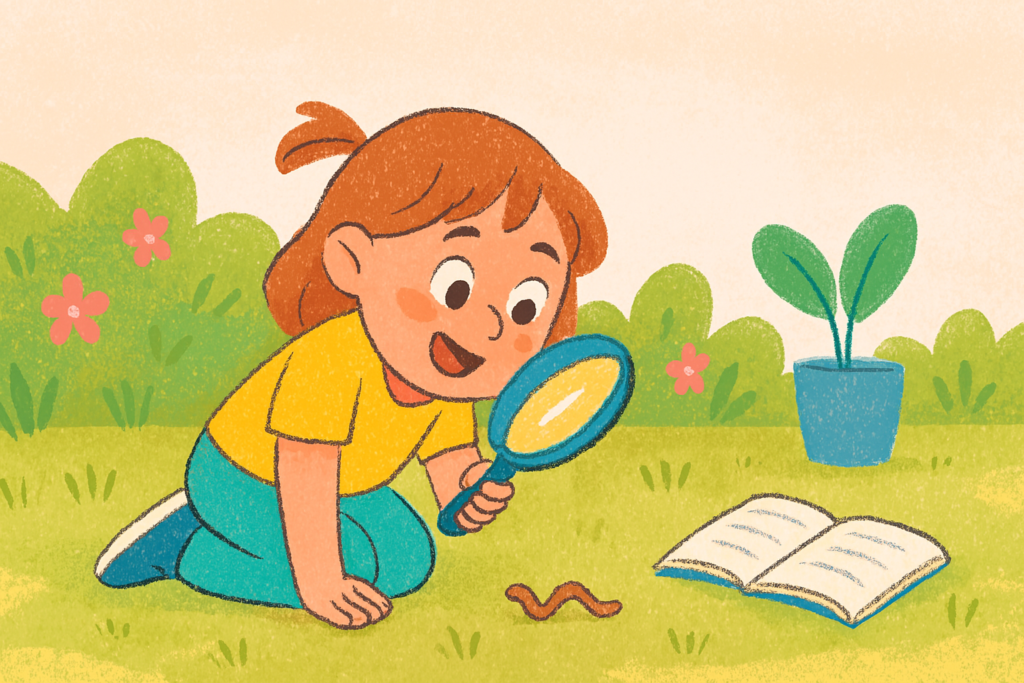
Curiosity Drives Learning Behavior
Curiosity functions as a natural learning engine.
When children are curious, they tend to:
- Ask questions about what they observe
- Experiment with new ideas
- Persist longer during exploration
- Show interest in understanding how things work
These behaviors encourage deeper engagement with learning experiences.
Unlike external pressure or structured instruction alone, curiosity originates internally. Because of this, it often produces more sustained learning effort.
Why Early Academic Speed Can Be Misleading
Children do not develop academic skills at identical rates. Some may demonstrate early progress simply because they encounter certain concepts earlier or show temporary interest.
However, rapid early performance does not guarantee lasting learning strength.
Parents sometimes try to measure learning progress too early, even though signs of engagement can be more meaningful indicators that children are getting enough learning at home.
In many cases, children who progress more gradually develop stronger learning behaviors over time. They build patience, persistence, and the ability to revisit ideas.
Early speed may produce visible results, but curiosity supports continued learning.
The Relationship Between Curiosity and Learning Habits
Curiosity and learning habits reinforce one another.
When children are curious, they engage more willingly in activities that support habit formation. Over time, these repeated engagements contribute to the development of consistent learning routines.
As discussed in early learning habits, the behaviors children practice repeatedly often shape how they approach learning in later years.
Curiosity encourages those behaviors to develop naturally.
How Adults Sometimes Limit Curiosity
Well-intentioned adults sometimes shift the focus toward performance too quickly.
This may occur when:
- Learning activities emphasize correct answers over exploration
- Mistakes are corrected immediately rather than examined
- Questions are answered too quickly without discussion
When learning becomes primarily outcome-focused, curiosity may gradually decrease.
Children may begin to view learning as something that must be performed correctly rather than explored.
Supporting Curiosity in Everyday Learning
Encouraging curiosity does not require complicated teaching strategies.
Parents can support it through simple practices:
- Allow time for questions during learning activities.
- Encourage children to explain their thinking.
- Treat mistakes as opportunities to explore alternative ideas.
- Introduce new topics gradually without pressure for immediate mastery.
These practices maintain a learning environment where exploration remains comfortable.
Curiosity and Attention Development
Curiosity also supports attention development.
Children are naturally more attentive when they are interested in what they are doing. Over time, this engagement helps strengthen concentration skills, which later become essential for more structured academic work.
Attention that begins with curiosity often evolves into the sustained focus needed for more demanding learning tasks.
Long-Term Learning Outcomes
Children who maintain curiosity tend to approach learning with greater openness and persistence.
They are more likely to:
- Explore unfamiliar subjects
- Ask deeper questions
- Continue learning independently
- Adapt when tasks become challenging
These qualities support academic development across many years.
Early academic speed may create temporary impressions of progress.
Curiosity sustains the learning process itself.