Many parents want to support their child as much as possible.
But in trying to be helpful, it is easy to cross a line where support turns into over-involvement. When this happens, children may become dependent on guidance instead of developing the ability to work on their own.
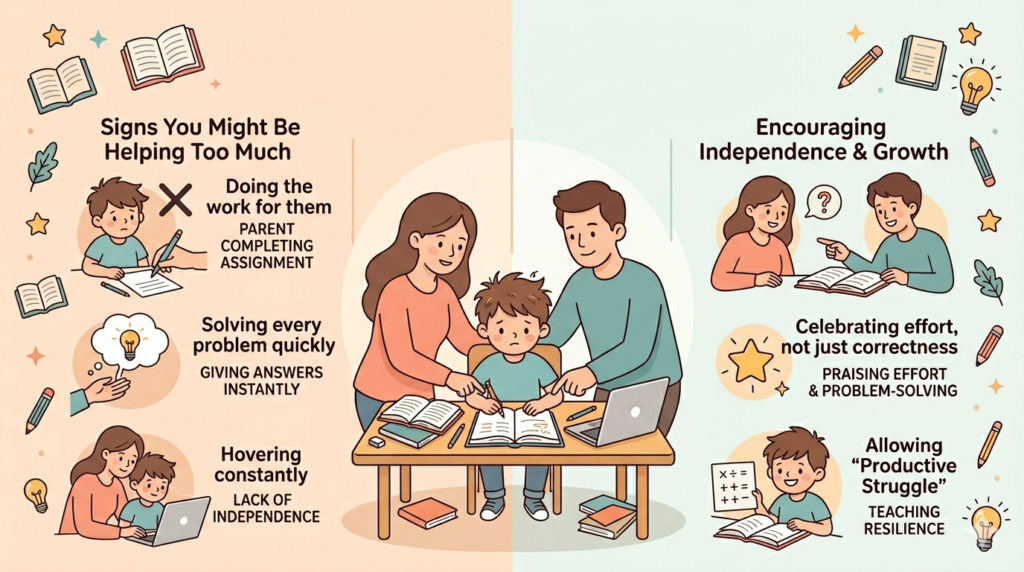
The challenge is not whether to help, but how much help is appropriate.
Why Helping Too Much Becomes a Problem
Helping a child is not the issue. The problem begins when help replaces effort.
When parents step in too quickly:
- children rely on guidance instead of thinking independently
- problem-solving skills develop more slowly
- confidence becomes dependent on external support
Over time, the child may appear capable only when help is available.
This makes learning more difficult as expectations increase.
Signs You May Be Helping Too Much
It is not always obvious when support becomes excessive. These are common signs to watch for:
1. Your Child Waits for You to Start
If a child does not begin tasks unless prompted or assisted, it may indicate reliance on external direction rather than internal initiative.
2. You Frequently Provide Answers
If you often explain solutions immediately, the child has fewer opportunities to think, attempt, and learn from mistakes.
3. Tasks Stop When You Step Away
If work pauses whenever you are not present, it suggests that independence has not yet developed.
4. Your Child Avoids Challenge
When children are used to receiving help quickly, they may avoid situations that require effort or persistence.
Why This Pattern Develops
Overhelping is rarely intentional. It usually comes from:
- wanting to save time
- reducing frustration
- ensuring tasks are completed correctly
While these intentions are reasonable, they can unintentionally reduce a child’s opportunity to develop independence.
What to Do Instead
The goal is not to stop helping, but to adjust how help is given.
1. Delay Immediate Help
When a child struggles, allow time before stepping in.
A short pause gives the child a chance to think and attempt a solution.
2. Guide Instead of Solving
Ask simple questions:
- “What do you think you should try next?”
- “Can you solve part of it first?”
This keeps the child engaged without removing responsibility.
3. Reduce Support Gradually
Instead of making a sudden change, slowly reduce involvement over time.
This allows the child to adapt without feeling overwhelmed.
4. Encourage Task Initiation
Support the child in starting tasks independently, even if they need help later.
This is an important step toward building responsibility.
Connecting Support to Independence
Reducing overhelping is not just about changing behavior. It is part of a broader process of developing independence.
When support is adjusted gradually, children begin to take more responsibility for their learning. This progression is explained in How to Build Learning Independence in Children.
Common Mistakes to Avoid
- stepping back too suddenly
- expecting immediate independence
- confusing independence with lack of support
Balanced support is more effective than extreme changes.
Understanding when to step in and when to step back is essential, and is explained in How to Know When to Help Your Child and When to Step Back.
Conclusion
Helping your child is important, but the way help is given matters.
Too much support can slow the development of independence, while thoughtful guidance allows children to build confidence and responsibility over time.
The goal is not to remove help, but to provide it in a way that encourages your child to think, act, and learn more independently.
Recommended Next Step
If you want to understand how to gradually reduce support while building independence, the next step is to learn how independence develops over time.