Some children avoid difficult tasks even when they are capable of completing them.
They may delay starting, give up quickly, become frustrated easily, or avoid the task entirely. In many cases, parents interpret this as laziness or lack of effort.
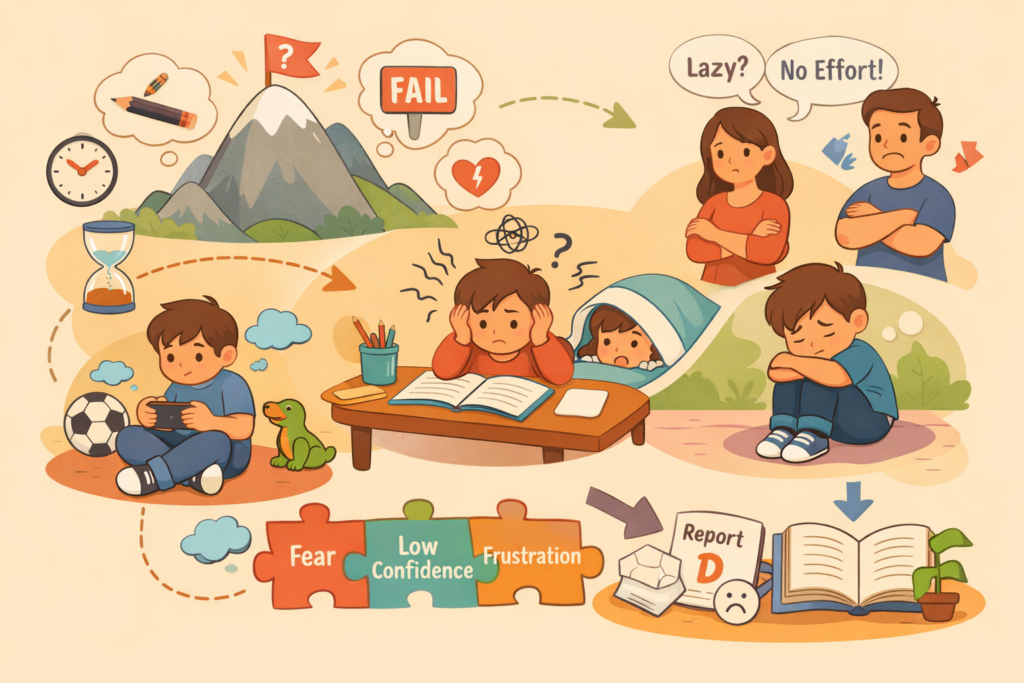
However, task avoidance is often connected to uncertainty, fear of failure, low confidence, or difficulty managing frustration.
Understanding why children avoid difficult tasks is important because repeated avoidance can gradually affect learning habits, confidence, and independence.
Why Difficult Tasks Trigger Avoidance
Difficult tasks place higher demands on attention, problem-solving, and emotional regulation.
When children feel unsure about success, avoidance becomes a way to reduce discomfort.
This may appear as:
- procrastination
- distraction
- frustration
- refusal to continue
- frequent requests for help
The goal of avoidance is usually not to escape learning completely, but to escape the feeling of difficulty.
Common Reasons Children Avoid Difficult Tasks
1. Fear of Making Mistakes
Some children avoid difficult tasks because mistakes feel emotionally uncomfortable.
They may worry about:
- getting answers wrong
- disappointing parents
- appearing less capable
This can lead to hesitation before even beginning.
2. Tasks Feel Too Large
When a task appears overwhelming, children often struggle to identify where to start.
Without a clear first step, avoidance increases.
A practical approach to improving this behavior is explained in How to Help Your Child Start Tasks Without Procrastination.
3. Difficulty Managing Frustration
Difficult tasks naturally create moments of struggle.
Children who have not yet developed frustration tolerance may stop quickly once discomfort appears.
4. Overdependence on Help
If children become used to immediate assistance, they may avoid tasks that require independent effort.
Over time, this reduces confidence in handling challenges alone.
A structured explanation of gradually reducing support is covered in How to Build Learning Independence in Children.
Why Pressure Often Increases Avoidance
When parents respond to avoidance with excessive pressure, children may become even more resistant.
Pressure can increase:
- fear of failure
- emotional stress
- mental fatigue
As a result, difficult tasks begin to feel emotionally threatening rather than manageable.
A deeper explanation of this pattern is covered in Why Forcing Study Time Often Backfires.
What Actually Helps
1. Break the Task Into Smaller Steps
Large tasks feel more manageable when divided into smaller parts.
Instead of focusing on completing everything, focus on beginning one small section.
Small progress reduces emotional resistance.
2. Normalize Struggle
Children benefit from understanding that difficulty is part of learning, not evidence of failure.
Remind them that:
- confusion is normal
- mistakes are expected
- improvement takes repetition
This reduces fear around challenging work.
3. Stay Calm During Mistakes
Children often react to the emotional tone around learning.
Calm responses help children remain engaged even when tasks become difficult.
4. Focus on Consistent Effort
The goal is not immediate perfection.
Repeated effort over time builds both confidence and skill.
Short, consistent attempts are usually more effective than long, pressured sessions.
The Role of Focus and Structure
Avoidance becomes more common when:
- study sessions are too long
- routines are inconsistent
- distractions are frequent
- tasks lack clear structure
Children manage difficult work more effectively when learning conditions are predictable and manageable.
A structured approach to improving focus is explained in Why Children Lose Focus While Studying (and What Actually Helps).
Common Mistakes to Avoid
1. Labeling the Child as Lazy
Avoidance is often connected to emotional difficulty, not unwillingness to learn.
2. Solving Every Problem Immediately
Constant intervention prevents children from developing persistence.
3. Expecting Confidence Before Practice
Confidence usually develops after repeated experience with manageable challenge.
Conclusion
Avoiding difficult tasks is common in children, especially when learning feels overwhelming or emotionally stressful.
Children improve gradually when tasks become more manageable, support is balanced carefully, and mistakes are treated as part of learning.
Over time, repeated exposure to manageable challenge helps children develop persistence, confidence, and greater independence.
Difficult tasks become less threatening when children believe they can work through them step by step.